
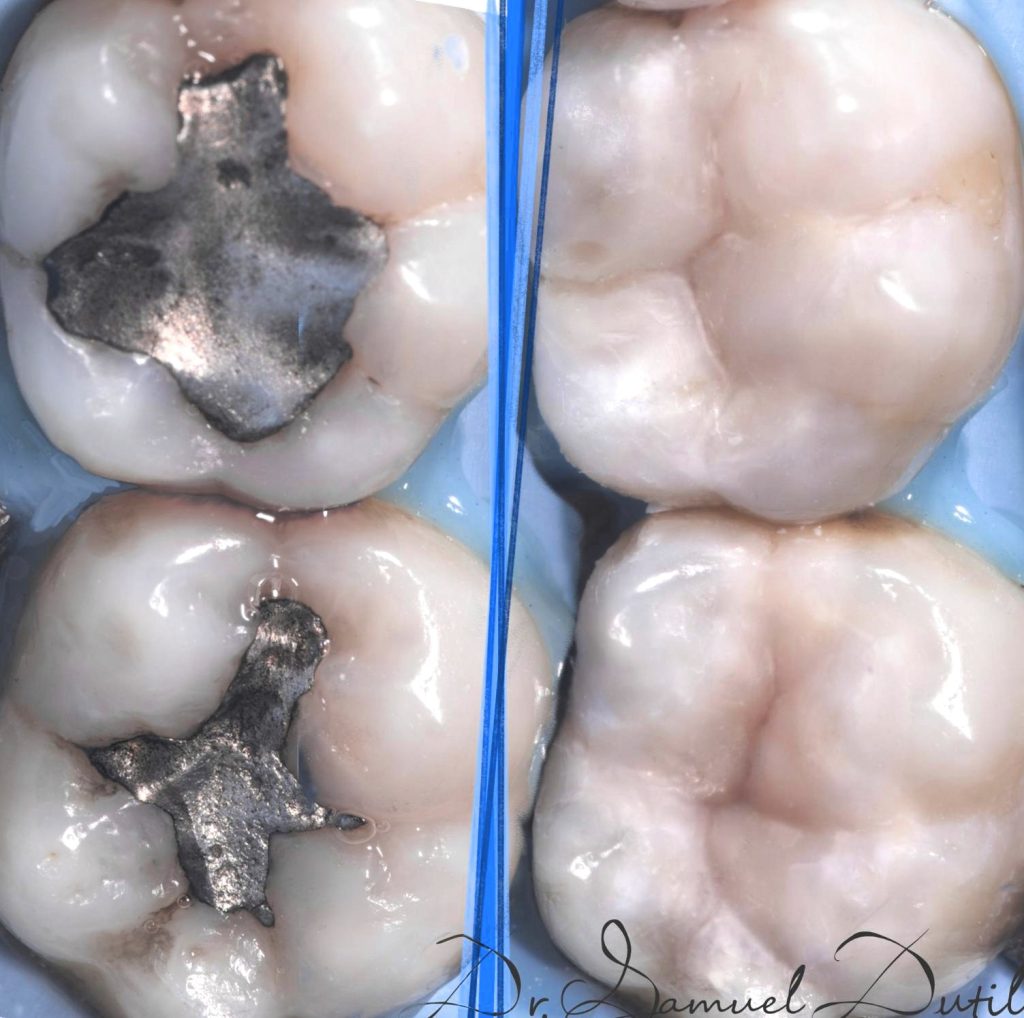
Biomimetic Dentistry: What you need to know before getting your next filling done.
Ask us about biomimetic restorative options:
Dr. Sam Dutil is a certified member of the Academy of Biomimetic Dentistry, reflecting his training and commitment to this conservative, evidence-based approach. Through ongoing education and years of experience with dental operating microscope, he offers biomimetic treatment options designed to preserve natural tooth structure, strengthen compromised teeth, and provide long-lasting, minimally invasive restorations. Patients seeking a thoughtful, modern approach to restorative care can feel confident knowing they have access to biomimetic dentistry solutions tailored to protect their long-term oral health.
Biomimetic Dentistry: Restoring Teeth the Way Nature Intended
Dentistry has evolved significantly over the past few decades. One of the most exciting advancements is biomimetic dentistry—a philosophy and clinical approach focused on preserving natural tooth structure and restoring teeth in a way that mimics their original strength, function, and aesthetics.
Rather than relying on aggressive preparation techniques and full-coverage restorations, biomimetic dentistry aims to work with the natural tooth—not against it.
What Is Biomimetic Dentistry?
The word “biomimetic” literally means to imitate life. In dentistry, this means restoring damaged teeth in a way that replicates their natural properties—flexibility, strength, and appearance.
Natural teeth are remarkably engineered. Enamel is strong and brittle. Dentin underneath is softer and more flexible. Together, they create a shock-absorbing structure capable of withstanding years of chewing forces.
Traditional restorative methods sometimes remove significant healthy tooth structure to place crowns or large restorations. Biomimetic dentistry, by contrast, emphasizes:
Maximum preservation of healthy enamel and dentin
Adhesive bonding techniques
Stress-reduced restorations
Long-term structural integrity
The goal is simple: keep teeth strong for as long as possible.
Why Preservation Matters
Every time a tooth is drilled, it becomes structurally weaker. Historically, dentistry followed a “drill and fill” model that often required removing additional healthy structure for retention and resistance form.
Biomimetic dentistry shifts this paradigm. Instead of cutting the tooth to mechanically hold a restoration, modern adhesive materials allow dentists to bond restorations directly to the tooth structure.
This means:
Less drilling
Smaller restorations
Stronger remaining tooth structure
Reduced risk of fractures
Preserving enamel is especially critical. Bonding to enamel is more predictable and durable than bonding to dentin, which makes conservative preparations even more important.
How Biomimetic Dentistry Works
Biomimetic techniques often involve:
1. Caries Removal with Precision
Only infected tooth structure is removed. Affected but remineralizable dentin may be preserved when appropriate.
2. Immediate Dentin Sealing (IDS)
Freshly cut dentin is sealed immediately after preparation, improving bond strength and reducing post-operative sensitivity.
3. Layered Composite Restorations
Instead of placing a single bulk material, composite is layered to mimic the natural properties of dentin and enamel.
4. Onlays Instead of Crowns
When possible, partial coverage restorations (onlays) are used instead of full crowns, maintaining more natural tooth structure.
Benefits of Biomimetic Dentistry
Patients often experience:
Stronger restorations
Reduced sensitivity
Lower risk of root canal treatment
More natural aesthetics
Long-term tooth preservation
Because the tooth is reinforced rather than aggressively reduced, the overall lifespan of the tooth may be extended.
Is Biomimetic Dentistry Right for Everyone?
Biomimetic dentistry requires advanced training, precision, and careful case selection. It is especially beneficial for:
Teeth with cracks
Large failing fillings
Moderate structural loss
Patients seeking conservative treatment options
In cases of severe damage or advanced decay, traditional approaches may still be necessary. The key is thoughtful diagnosis and individualized treatment planning.
The Future of Restorative Dentistry
As materials and adhesive technologies continue to improve, dentistry is moving toward minimally invasive and biologically respectful approaches. Biomimetic dentistry represents this shift—focusing on preservation, longevity, and respecting the natural engineering of the tooth.
Ultimately, the philosophy aligns with a simple principle:
The best dentistry is the dentistry that preserves the most natural tooth structure.
When we restore teeth the way nature designed them, we give our patients stronger, healthier smiles for years to come.
Dentures can be a good option when natural teeth are missing, and you’re looking to improve your facial appearance, speech, and ability to eat and chew. They are particularly beneficial if you have lost all or most of your teeth due to decay, periodontal disease, or injury. Our dentists at Academy Dental provide these different types of dentures:
- Complete Dentures: When all natural teeth are missing or need to be removed, complete dentures can restore a full set of teeth.
- Partial Dentures: If you have some natural teeth remaining, partial dentures can fill in the gaps and help maintain the position of your remaining teeth.
- Implant-Supported Dentures: These are more stable than traditional dentures and can be a good choice if you require a more secure fit.
We recommend consulting with our team of dental professional to determine the best type of dentures for your specific needs, considering factors such as oral health status, lifestyle, and budget. Dentures require maintenance and may need adjustments over time to ensure a proper fit and function.
Biomimetic Dentistry: What you need to know before getting your next filling done. Read More »